Admin Mode (Logged in as 100re)

WELCOME TO 100% RENEWABLE ENERGY LABORATORY

Established in July 2018 at Hanoi University of Science and Technology (HUST), conducting world-class research on smart grids, renewable integration, energy storage, green hydrogen, and electricity markets.

JOIN US EXPLORE RESEARCH
200+
Publications
40+
Researchers & Members
8
Research Teams
10:1
Student Supervisor Ratio

What are our Goals?

The power grid is undergoing a profound structural transformation fueled by the rapid growth of renewable energy sources such as solar photovoltaics, wind power, and battery storage. The traditional centralized, one-directional grid architecture is evolving into a deregulated, multi-dimensional ecosystem characterized by multi-layered data streams, intelligent edge controllers, and flexible demand response mechanisms.

While smart cities, microgrids, and electric transportation present tremendous opportunities for decarbonization, they introduce critical challenges regarding frequency stability, voltage regulation, power quality, and cybersecurity. Many countries and international organizations are ambitiously advancing toward 100% renewable energy penetration.

100RE Laboratory was founded to directly address these complex technical and economic questions through rigorous mathematical modeling, real-time hardware-in-the-loop (HIL) simulations, artificial intelligence forecasting, and field experimental validations in Vietnam and internationally.

Assoc. Prof. Nguyen Duc Tuyen, Head of 100RE Laboratory
July 05, 2018

Welcome to the 100RE Research Platform

The 100% Renewable Energy Research Platform (100RE Lab) is part of the Department of Power Systems, School of Electrical and Electronic Engineering at Hanoi University of Science and Technology (HUST). 100RE Lab conducts advanced scientific research, technology development, and industrial consultancy toward 100% clean, sustainable energy systems. The laboratory operates dedicated experimental testbeds, rooftop solar microgrids, and high-performance computing clusters linking generation, storage, electric transport, and intelligent automation.

100RE Energy Lab Infrastructure

The 100RE Laboratory serves as a unified academic research infrastructure in which the dynamic interactions of clean power generation, energy storage, power electronics, and artificial intelligence are validated under realistic operating conditions. A synchronized network of installations links rooftop solar arrays, wind turbine simulators, battery storage banks, water electrolyzers, and electric vehicle charging infrastructure via high-speed industrial SCADA and telemetry protocols.

1. PV Team

PV Team - Solar Photovoltaic Systems
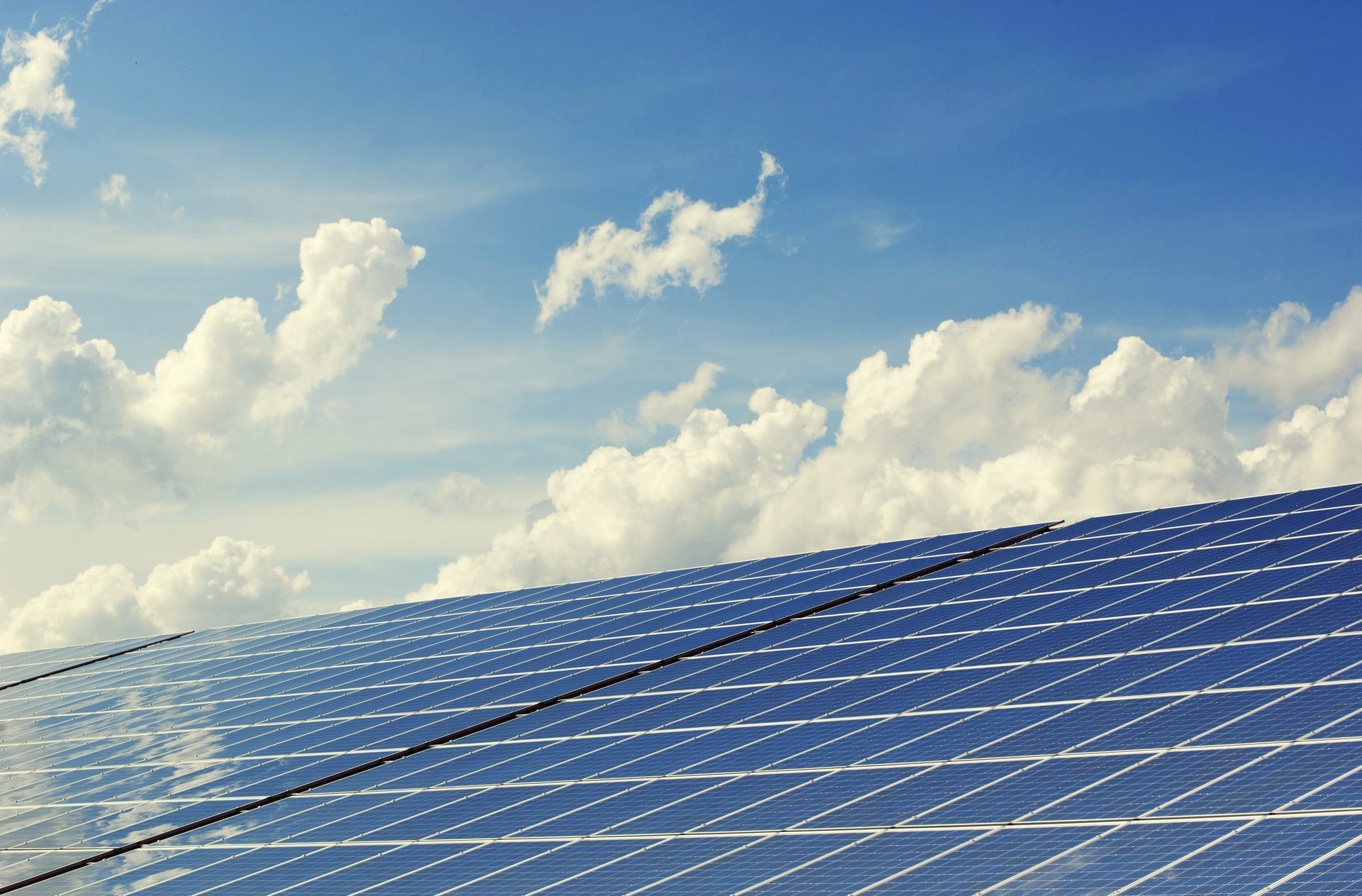
Rooftop Solar PV SCADA Experimental Array at HUST D9 Building (Photo: 100RE Laboratory, HUST)

The PV Team (Photovoltaic Systems) conducts research on photovoltaic cell and array mathematical modeling, high-precision solar irradiance forecasting, and dynamic Maximum Power Point Tracking (MPPT) under complex climatic variations. The team operates a rooftop experimental solar PV station on the D9 building at HUST equipped with precision pyranometers and multi-channel data acquisition.

A core specialty is the dynamic array reconfiguration using solid-state switching matrices to mitigate partial shading losses, as well as solar hosting capacity evaluation and harmonic distortion analysis for urban commercial and industrial distribution feeders across Vietnam.

2. AI Team

AI Team - Artificial Intelligence and Deep Learning
High-Performance GPU Computing Cluster for Renewable AI Forecasting (Photo: 100RE Laboratory)

The AI Team (Artificial Intelligence) specializes in Deep Learning, neural network architectures, and advanced data-driven analytics for clean energy systems. Key breakthroughs include hybrid Spatial Attention Mechanism - Long Short-Term Memory (SAM-LSTM) models and Evolutionary Deep Self-Attention networks for ultra-short-term solar irradiance and wind power generation forecasting.

The team also develops computer-vision-based automated thermal fault detection on solar modules, physics-informed neural networks (PINN) for dynamic line rating, and decentralized blockchain smart contracts for secure peer-to-peer (P2P) renewable energy trading in urban microgrids.

3. Demand Response and Unit Commitment Team

Demand Response and Unit Commitment Team
Stochastic Unit Commitment & Demand Response Optimization Cluster (Source: 100RE Laboratory)

The Demand Response and Unit Commitment Team advances mathematical optimization algorithms to achieve optimal, security-constrained generator scheduling in power grids with high renewable variability. Using Mixed-Integer Linear Programming (MILP), Genetic Algorithms (GA), and rolling-horizon dispatching, the team minimizes production costs while maintaining spinning reserve requirements.

On the demand side, the team designs dynamic retail pricing tariffs, critical-peak rebate incentives, and automated load-shifting mechanisms. By quantifying consumer elasticity and comfort indices, demand flexibility is transformed into an active grid-balancing resource.

4. Wind Team

Wind Team - Wind Energy Dynamics
Wind Power Generation Simulation & Dynamic Grid Stability Platform (Source: 100RE Laboratory)

The Wind Team (Wind Energy) focuses on wind turbine aerodynamics, power conversion systems (PCS), and multi-turbine wake interactions for both onshore and offshore wind farms. Research investigates Low Voltage Ride Through (LVRT) enhancement during severe grid faults, enabling wind generators to remain online and inject reactive support.

The team also develops synthetic inertia emulation methods for doubly-fed induction generators (DFIG) and permanent magnet synchronous generators (PMSG), as well as hybrid wind-BESS coordinated control schemes to eliminate steep ramp-rate power fluctuations.

5. Smart Grid Team

Smart Grid Team - Microgrid Automation and SCADA
Research Control Room & Mini-SCADA Testbed in 100RE Lab (Photo: 100RE Laboratory, HUST)

The Smart Grid Team develops intelligent monitoring, protective relay coordination, and microgrid energy management systems (EMS). The team manages the laboratory's real-time Mini-SCADA testbed, combining programmable industrial controllers, bidirectional communication gateways, and digital telemetry.

Key research priorities include automated fault location, isolation, and service restoration (FLISR), Virtual Power Plants (VPP) aggregating distributed energy resources, cybersecurity in inverter-based power systems, and active distribution network voltage stability.

6. Electric Vehicle Team

Electric Vehicle Team - EV Charging and V2G
Bidirectional EV Charging Station & V2G Power Electronics Testbed (Photo: 100RE Laboratory)

The Electric Vehicle Team (Electric Vehicle) investigates the interactions between electrified transportation fleets and the power distribution grid. The team models the spatial-temporal charging demand of passenger EVs, commercial logistics, and urban electric bus networks to assess transformer loading and power quality impacts.

Research emphasizes smart coordinated charging scheduling to prevent local distribution bottlenecks, bidirectional Vehicle-to-Grid (V2G) power electronic topologies, and electrochemical battery degradation modeling to safeguard EV battery health during grid-support services.

7. Hydrogen Team

Hydrogen Team - Green Hydrogen and Fuel Cells
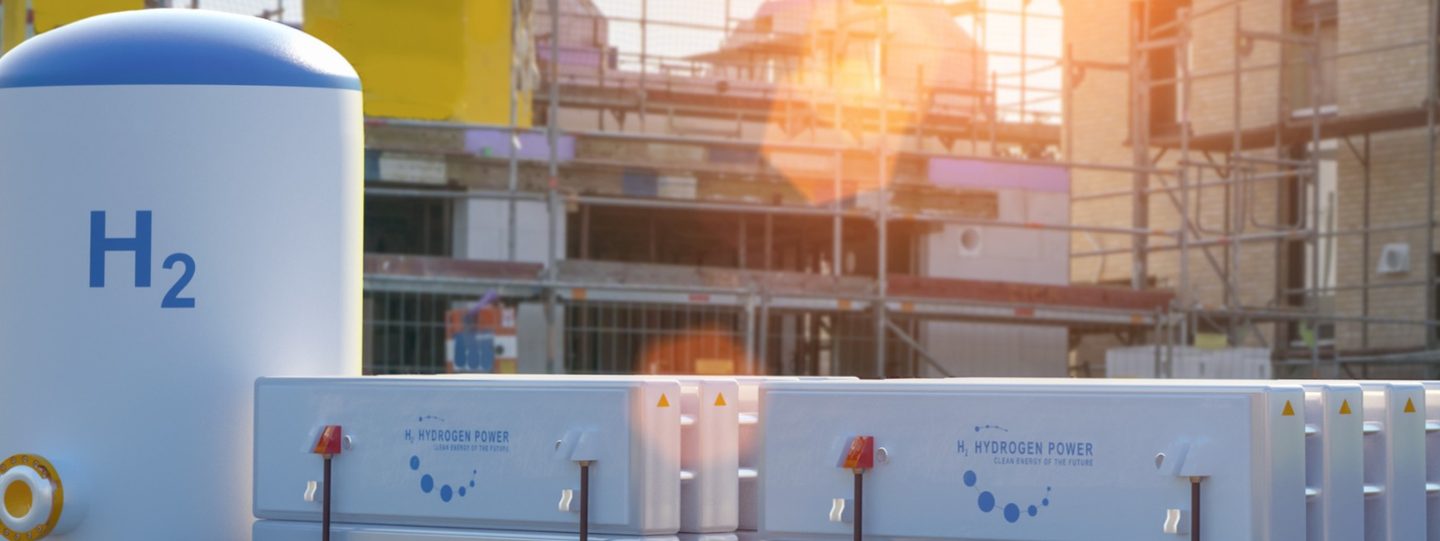
Solar-Coupled Water Electrolyzer & PEM Fuel Cell Test Platform (Photo: 100RE Lab & AIST Japan)

The Hydrogen Team (Green Hydrogen) explores clean hydrogen production, storage, and fuel cell energy conversion for deep decarbonization of hard-to-abate sectors. Research centers on alkaline and proton exchange membrane (PEM) water electrolyzer dynamics under fluctuating renewable supply.

In collaboration with international partners (AIST Japan, Shibaura Institute of Technology), the team evaluates Power-to-Gas seasonal energy storage, fuel cell micro-CHP efficiency, green hydrogen techno-economics, and ammonia supply chain logistics for Vietnam's Net-Zero 2050 pathway.

8. BESS Team (Battery Energy Storage Systems)

BESS Team - Battery Energy Storage Systems
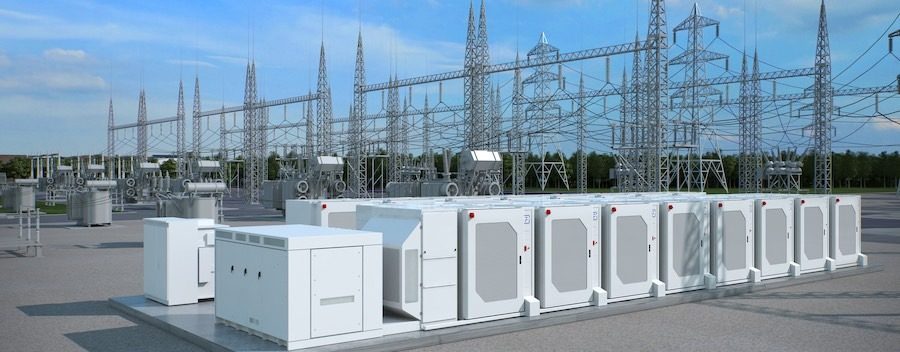
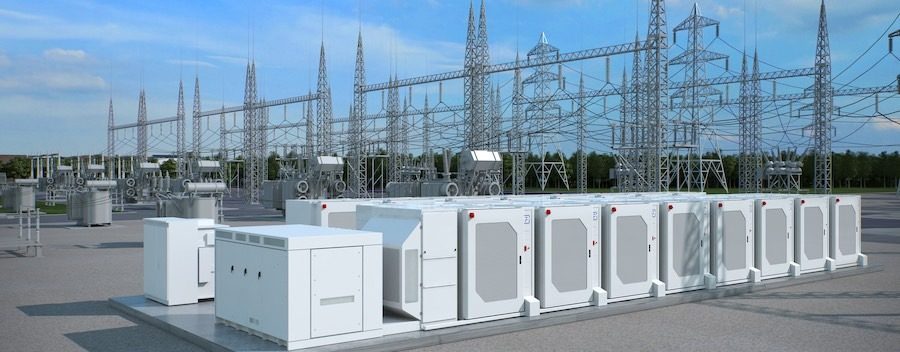
Grid-Connected Battery Energy Storage (BESS) Regulation Bench (Photo: 100RE Laboratory, HUST)

The BESS Team (Battery Energy Storage Systems) develops control, sizing, and degradation modeling for grid-scale and distributed electrochemical storage systems. The team formulates real-time control algorithms for primary and secondary frequency regulation (PJM RegD standard), synthetic inertia, and peak load shaving.

Research rigorously analyzes lithium-ion battery state-of-charge (SoC), state-of-health (SoH), and electro-thermal degradation, designing optimal multi-use dispatch strategies. The team actively consults for organizations such as VIETSE and GIZ on Vietnam's national BESS deployment roadmap.

100RE Lab Location

Open in Google Maps

Hanoi University of Science and Technology (HUST)
Offices: D9-300 & C7-503
Address: No. 1 Dai Co Viet Road, Hai Ba Trung District, Hanoi 100000, Vietnam